One AI baseline for everyone who works here
Your team already uses ChatGPT or Claude for basic prompting. This program takes them from "it's a better search box" to structured, reliable daily use: how LLMs work, how to prompt them repeatably, and how to use them safely.
AI for Everyone
From casual ChatGPT use to structured fluency
How LLMs work
Plain language: tokens, context windows, memory, and why model choice changes output quality.
Prompting that repeats
The Task–Context–Examples–Format framework, plus Custom GPTs and Gemini Gems for recurring team tasks.
The tool ecosystem
Which tool for which job, when to switch, and safe-usage rules for company data throughout.
Every session ends with an output the team uses immediately. The phase closes with each department building a prompt library it owns.
The difference structure makes
A real example of the Task–Context–Examples–Format framework we teach, on an everyday HR task.
Generic output. Wrong tone, missing your policy details, rewritten five times before it’s usable.
Context: We moved from 18 to 21 leave days; carry-forward capped at 5. Manufacturing staff read this on mobile.
Example: [last year’s announcement pasted]
Format: Under 150 words, one summary line, bullets, plain English.
Usable on the first try, in your company’s voice, every time. Your team builds a library of these for their own workflows.
Where is your team today?
Three questions, honest answer at the end.
1. How does your team mostly use AI right now?
2. Do teams share prompts or does everyone reinvent their own?
3. Has anyone automated a recurring task end to end?
Credentials that hold up
Get the sample enterprise prompt library
20 real prompts from our department libraries, free. See the quality before you scope anything.
Before the first cohort
Our team has zero AI experience. Is that a problem?
It's the design assumption. Content is pitched at the level of an HR or accounts team, and every example comes from your team's actual daily work.
How is this scheduled around real work?
Around your team: weekday evenings for weekend-working teams, fixed slots for shift-based ones. Sessions are recorded, with attendance reports to leadership.
What makes it stick after the sessions end?
The prompt libraries. Each department leaves with tested prompts for its own workflows, plus community access for every participant.
What comes after the foundation?
Department deep dives, leadership cohorts, or the Claude track. The foundation is deliberately the first rung of a ladder.


This foundation has run inside events, manufacturing and ingredients companies, including one delivered fully within a locked-down Microsoft environment.
Case studies →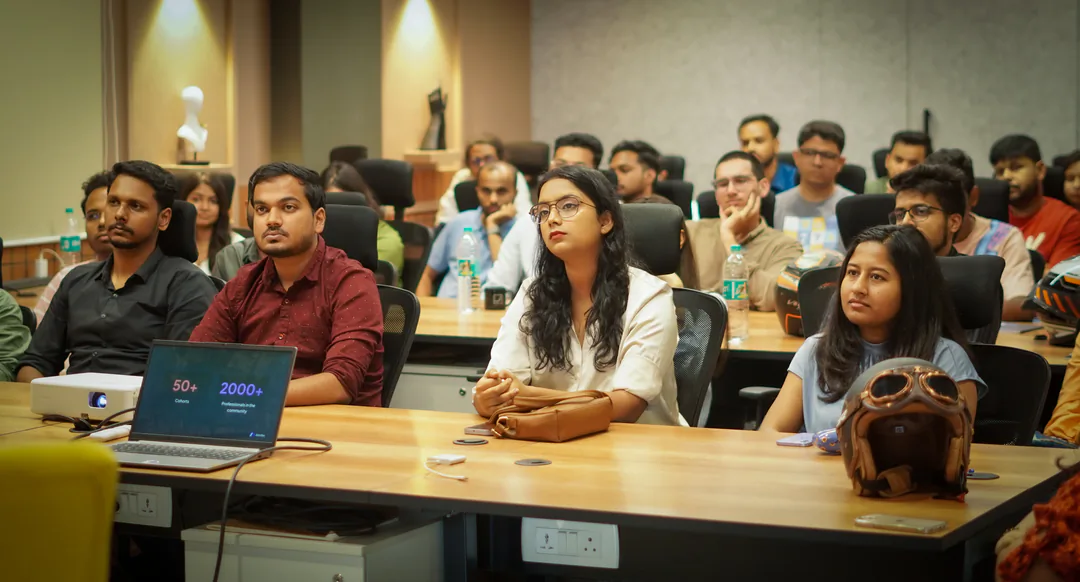
Give your whole org the same floor
One cohort, one shared baseline. Then build upward from it.